Portal home Download profile
PHILIPPINE NON-GOVERNMENT ORGANIZATION

Knowledge, skills and action for a sustainable future.

PACIFICTECH brings research, training, innovation and collaboration closer to children, youth, women, educators, citizens and communities.

OUR VISION

Recognized for outstanding research, learning and collaboration.

To become a nationally and internationally recognized Philippine NGO distinguished by outstanding research, training, innovation and collaboration for community engagement and a sustainable and safe environment—guiding people toward the frontiers of knowledge, skills development, academics, research and scholarship.

OUR MISSION

Quality, relevant and equitable education for responsible action.

PACIFICTECH provides citizens, stakeholders and other clientele with effective research training and education grounded in pedagogy, technology, arts and sciences. Its whole-person approach enables learners to think critically, judge intelligently, care and act responsibly in a changing country and world.

ESTABLISHED IN 2009

The history of PACIFICTECH RTIC CESSE Inc.

From a humble bahay kubo to a center of community service.

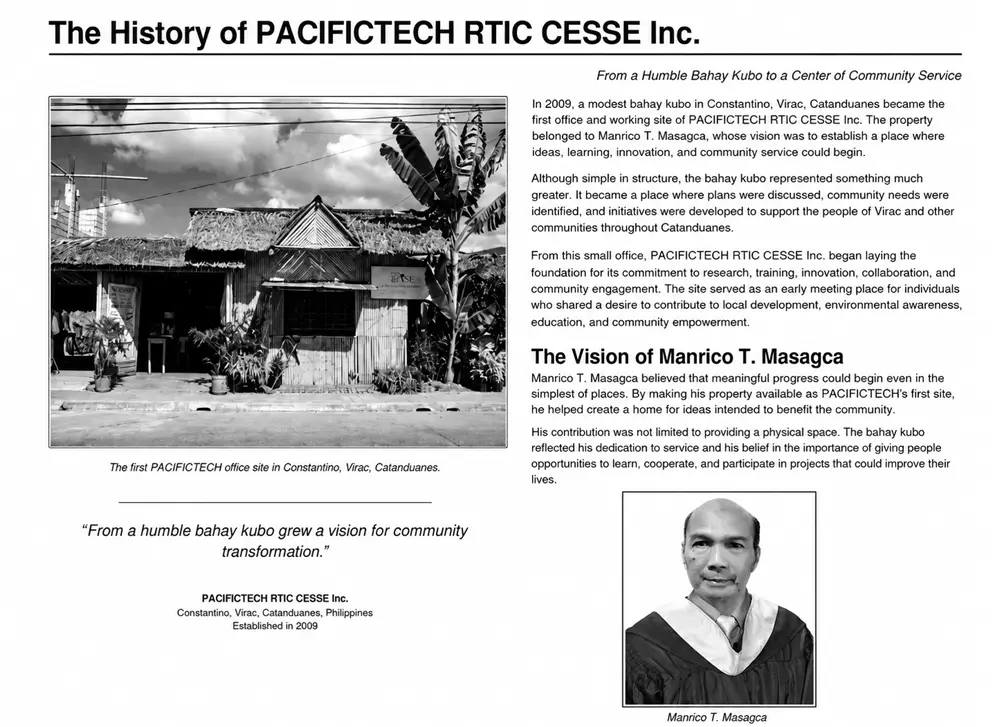
The first PACIFICTECH office in Constantino, Virac, Catanduanes, with founder Manrico T. Masagca
The first PACIFICTECH office site in Constantino, Virac, Catanduanes.

In 2009, a modest bahay kubo in Constantino, Virac, Catanduanes became the first office and working site of PACIFICTECH RTIC CESSE Inc. The property belonged to Manrico T. Masagca, whose vision was to establish a place where ideas, learning, innovation and community service could begin.

Although simple in structure, the bahay kubo represented something much greater. It became a place where plans were discussed, community needs were identified and initiatives were developed to support the people of Virac and other communities throughout Catanduanes.

From this small office, PACIFICTECH began laying the foundation for its commitment to research, training, innovation, collaboration and community engagement. The site served as an early meeting place for people who shared a desire to contribute to local development, environmental awareness, education and community empowerment.

THE VISION OF MANRICO T. MASAGCA

A home for ideas intended to benefit the community.

Manrico T. Masagca believed meaningful progress could begin even in the simplest of places. By making his property available as PACIFICTECH’s first site, he helped create a home where people could learn, cooperate and participate in projects that could improve their lives.

“From a humble bahay kubo grew a vision for community transformation.”
GLOBAL RECOGNITIONFalling Walls Foundation

2021 Future Learning finalist.

Work led by Dr. Jimmy T. Masagca involving BIOME, mangrove research, aquatic biodiversity, citizen science and digital education was selected as a finalist in the global Future Learning category.

01

Biodiversity research

Mangrove and aquatic-biodiversity studies connect local ecosystems with scientific inquiry.

02

Citizen science

Communities participate in gathering, interpreting and using knowledge for environmental action.

03

Digital education

Online learning widens access to science communication, exchange and collaborative learning.

04

Collaborative platform

Researchers, teachers, students, community members and practitioners exchange work and build partnerships.

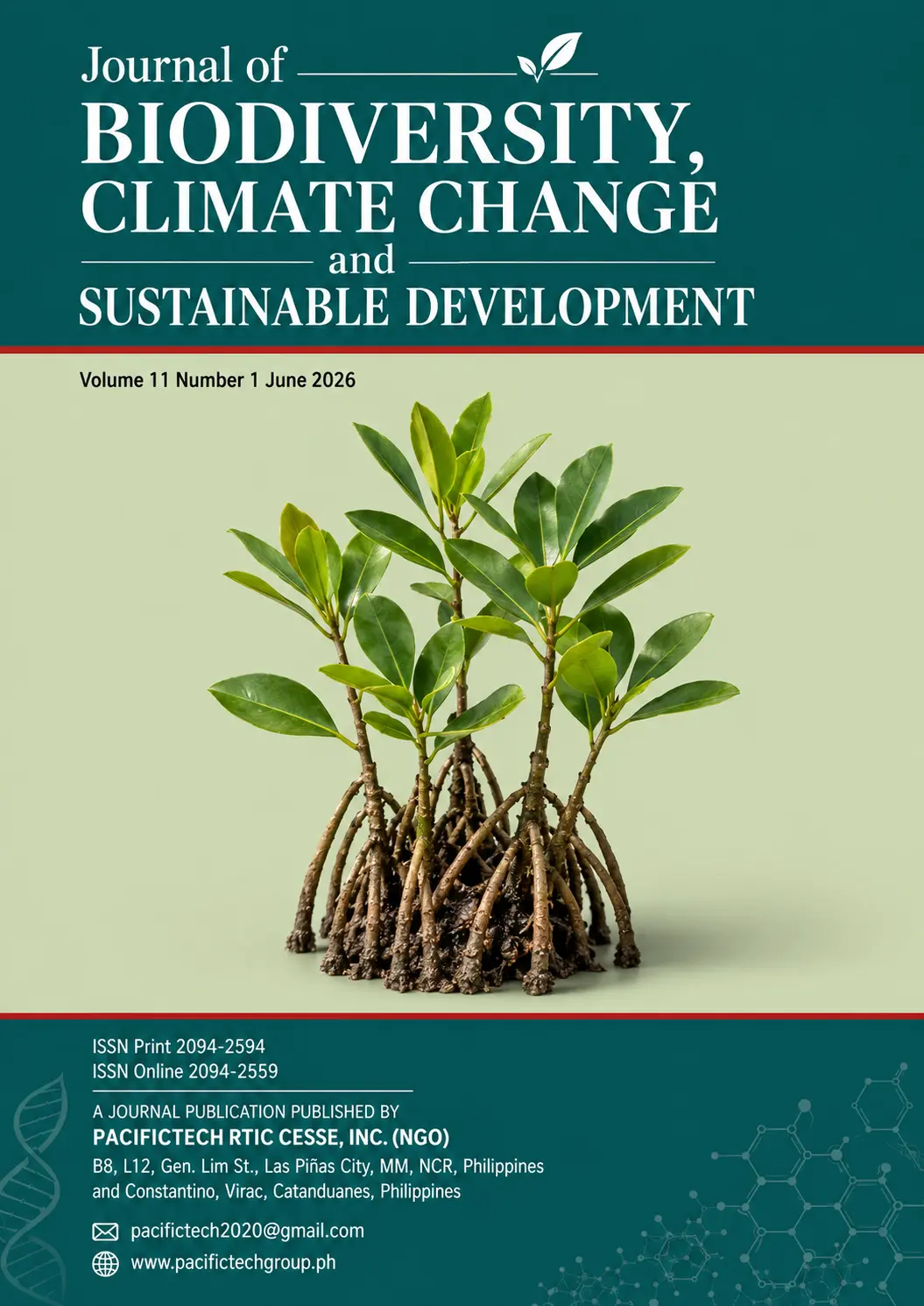
Journal of Biodiversity, Climate Change and Sustainable Development, Volume 11 Number 1, June 2026 cover
PUBLICATION & OPEN ACCESS

Knowledge should travel.

PACIFICTECH supports research publication and open access so researchers, educators, students and communities can share knowledge beyond institutional and geographic boundaries.

The Journal of Biodiversity, Climate Change and Sustainable Development advances conversations on biodiversity conservation, climate action and sustainable futures.

Journal portal Read publications
CURRENT ISSUE

Volume 11 · Number 1

June 2026 · Journal of Biodiversity, Climate Change and Sustainable Development

Published
June 2026
Articles
8
Pages
1–97
ISSN
2094-2559 (Online)

The journal portal tracks manuscripts from submission through review, payment verification, final PDF generation and open-access publication. Verified users can manage submissions, reviews, payments and published records.

MEMBERS, MANAGEMENT & SUPERVISION

A multidisciplinary community.

The NGO was conceived by researchers, trainers, innovators and collaborators responding to the need for a new generation of creative, innovative and values-driven citizens, skilled workers, professionals and knowledge producers.

An active core group of business leaders, researchers, entrepreneurs, engineers and dynamic innovators contributes varied preparation, talents and interests. Research, training, extension and social-enterprise activities are supervised by the President and handled by project coordinators.

Researchers & trainers Partners & collaborators Communities & youth
PACIFICTECH ECO RESEARCH HUB

Where community meets science and nature.

A community-centered physical and digital gateway where environmental education, practical research, learning, sustainable livelihoods and everyday community interaction come together under one roof.

Eco Research Laboratory

Microscopy, water quality, soil and plant studies, biodiversity documentation, coastal and mangrove research.

Digital Learning Station

Computers, internet, online courses, scientific references, GIS resources and AI-assisted research tools.

Training & Community Area

Workshops, seminars, youth programs, scientific writing, GIS, AI training and community discussion.

Plant Shop & Nursery

Native plants, herbs and seedlings with educational information about care and ecological value.

Coffee & Stopover

A welcoming entry point connecting visitors to projects, publications, training and volunteer opportunities.

Research Library

Journals, environmental references, biodiversity resources, training manuals and conference reports.

ENTERRESTDISCOVERLEARNRESEARCHPARTICIPATETAKE ACTION

Who the Hub serves

Students, youth, teachers, researchers, environmental volunteers, fisherfolk, coastal communities, small entrepreneurs, schools, universities, government partners, NGOs, visitors and the general public.

A social-enterprise model

Grant-supported programs can work alongside modest earned income from plants, refreshments, publications, courses, training, research services, workshops, venue use and eco-oriented merchandise. Income is reinvested in education, maintenance, research and community programs.

Long-term value

The Hub is designed as permanent local infrastructure for environmental education, digital learning, research mentoring, conservation participation and collaboration among communities and institutions.

BIOME logo
PHILIPPINE NATIONAL BIODIVERSITY MEETING

BIOME 1–10

A decade-spanning platform connecting biodiversity science, education, community engagement and island resilience.

2010

BIOME 1

Virac, Catanduanes

Climate change, sustainable agriculture, political ecology and biodiversity science.

2011

BIOME 2 / SEDTEC 1

Virac, Catanduanes

Knowledge, passion and leadership across biodiversity, education and technology.

2012

BIOME 3 / SEDTEC 2

Catandungan Festival

Water, biodiversity, renewable energy and ecosystem governance.

2013–14

BIOME 4 / BIOCULTURES

CatSU

Cooperation in water biodiversity conservation for island development.

2018

BIOME 5 / SEDTEC 3

Virac, Catanduanes

Mangrove biodiversity, environmental education and coastal resilience.

2020

BIOME 6

Virtual conference

Impacts of the pandemic on society, education, environment and development.

2022

BIOME 7 / Sea Research Symposium

Virac, Catanduanes

Local climate solutions for coastal wetlands and sustainable seafood production.

2024

BIOME 8

Virac & Puraran

Where community, science, faith and conservation meet.

2025

BIOME 9

Aklan

Waters for Hope: biodiversity, climate and food security in Philippine aquatic systems.

2026

BIOME 10

Virac, Catanduanes

2030: One Planet, One Promise — United for People & Planet.

BIOME EVENT ARCHIVE

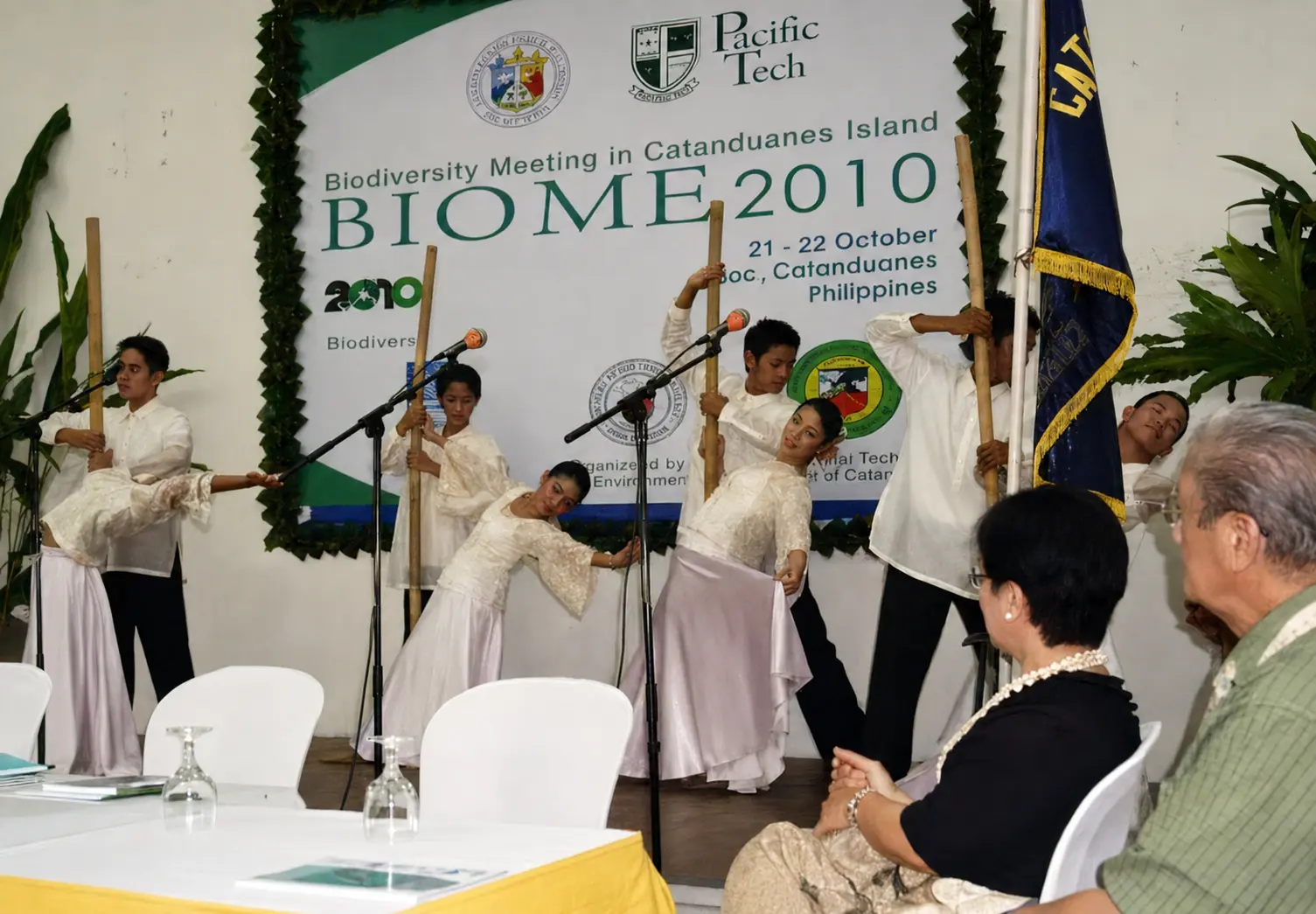
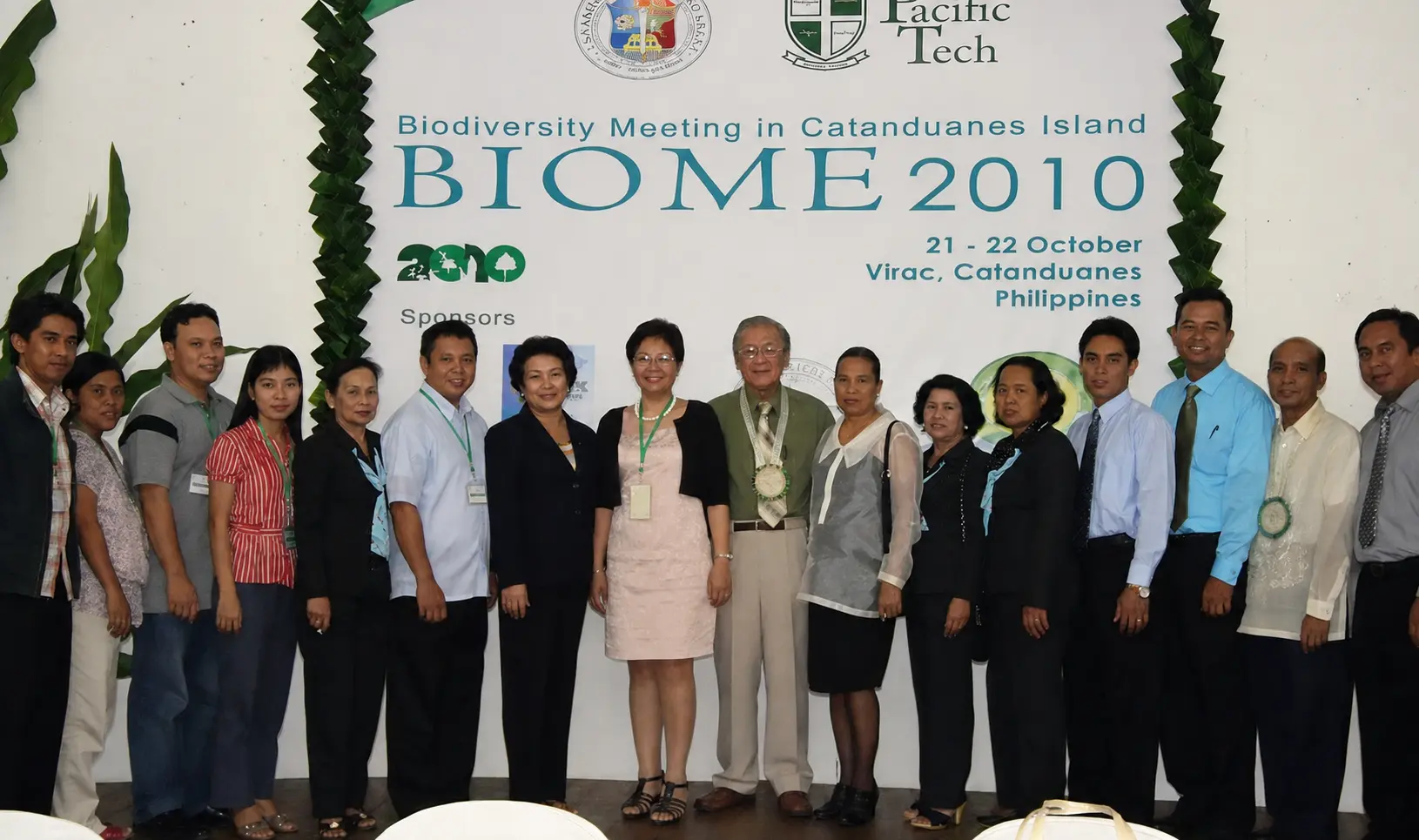
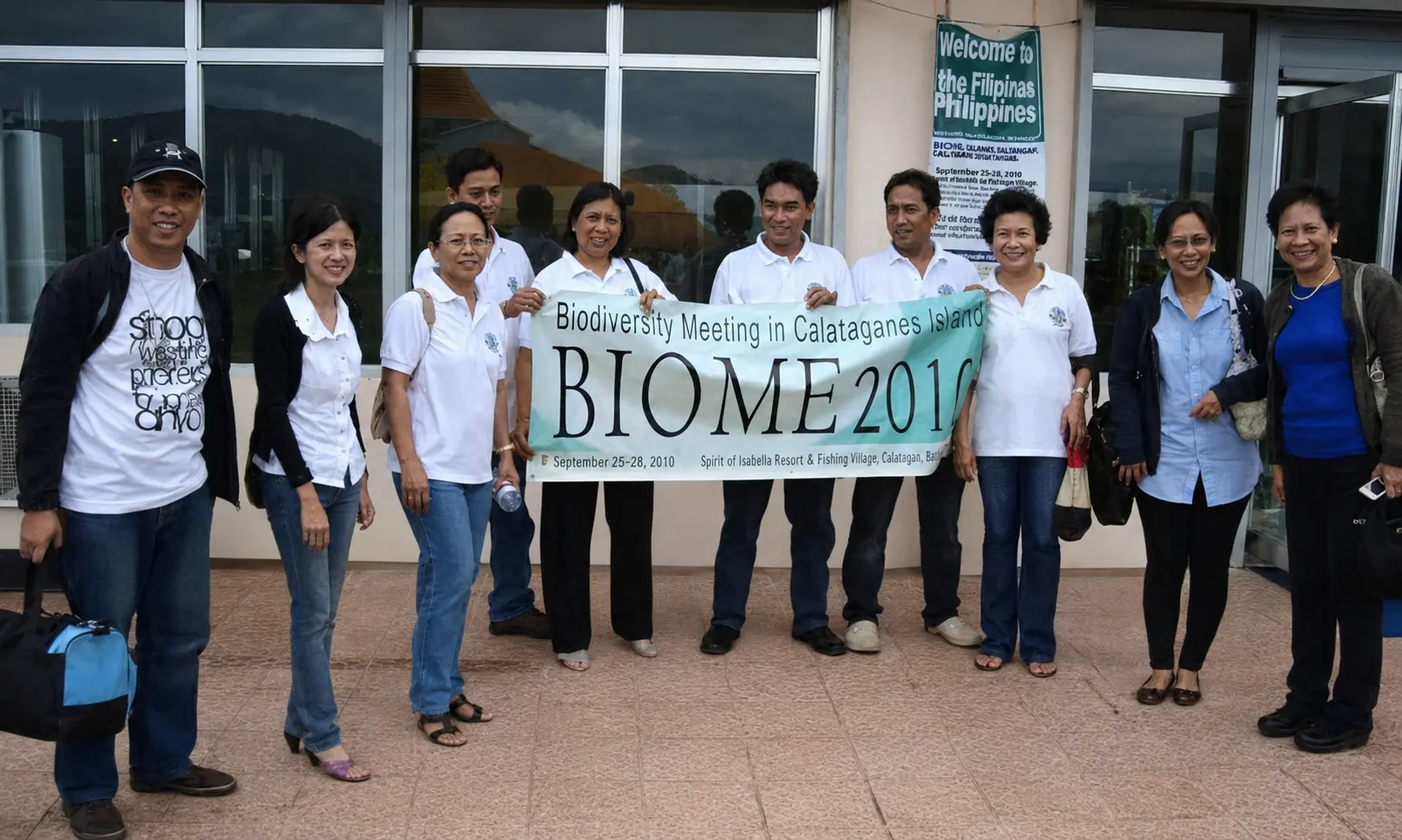
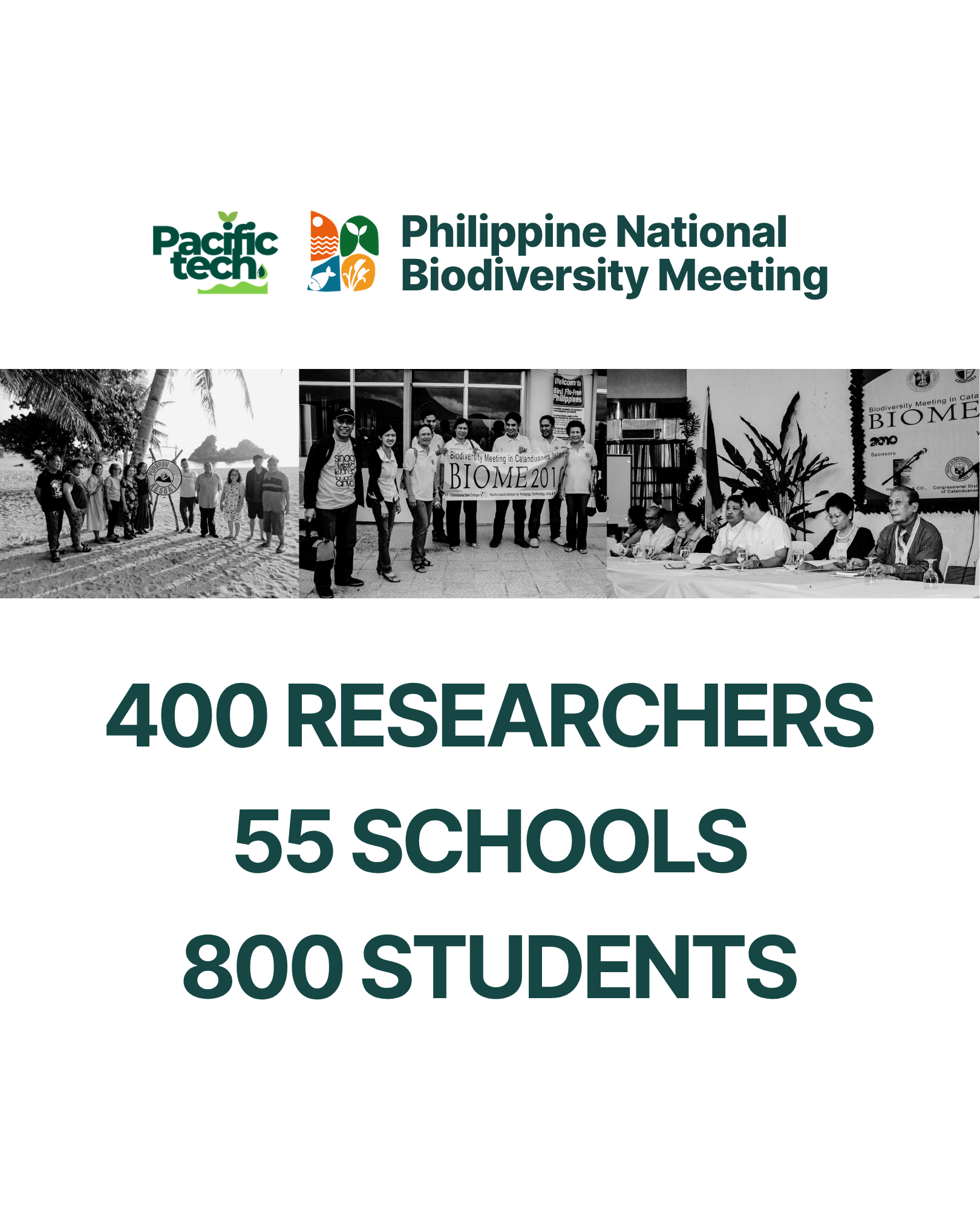
Selected photographs from PACIFICTECH biodiversity meetings and participating communities.

Ceremonial moment during a Philippine National Biodiversity Meeting
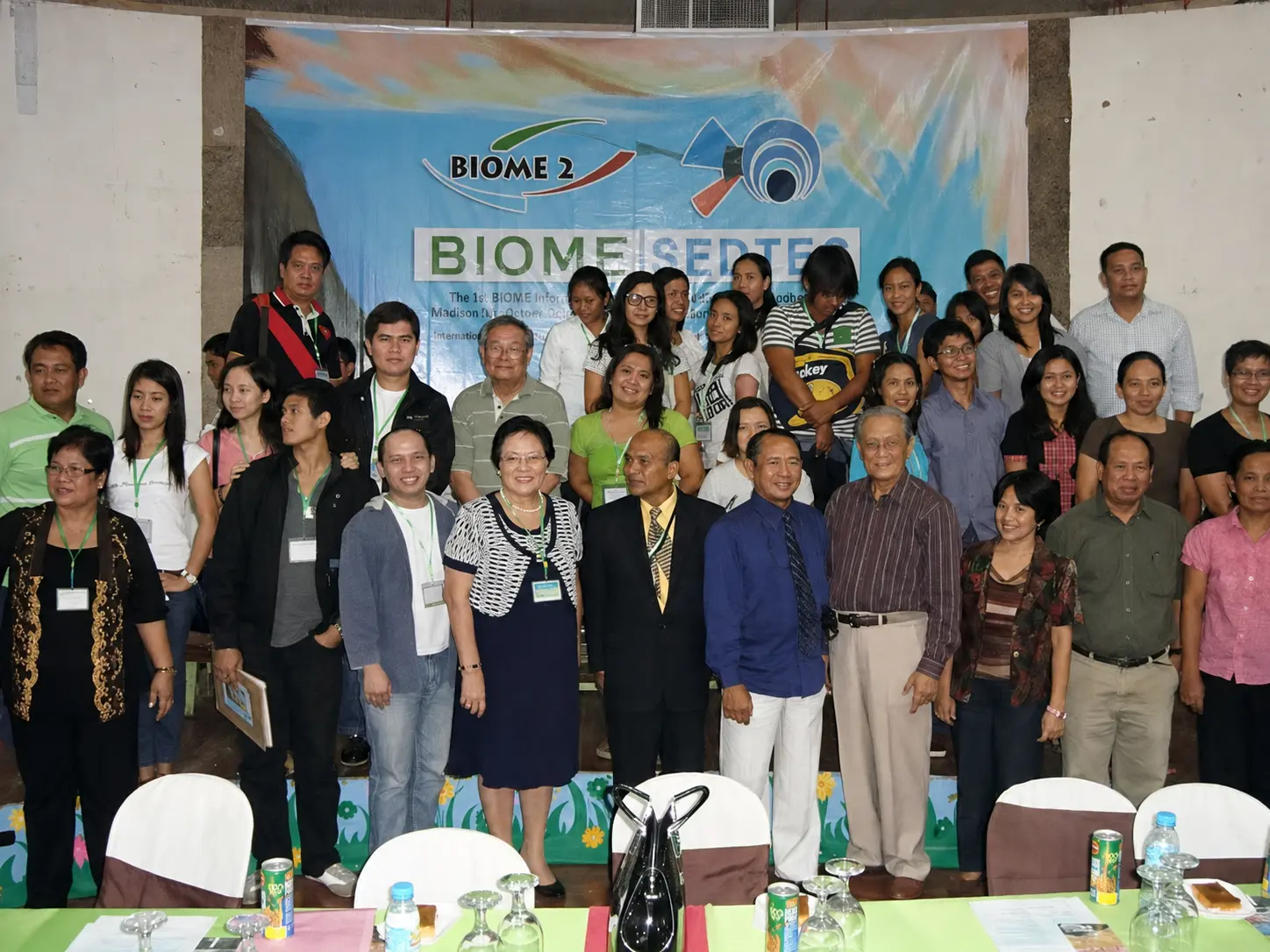
Participants at an early BIOME biodiversity meeting
BIOME participants and community representatives
Group photograph from a BIOME gathering
400Researchers
55Schools
800Students
Visit BIOME
MANGROVE RESTORATION

Why mangroves matter.

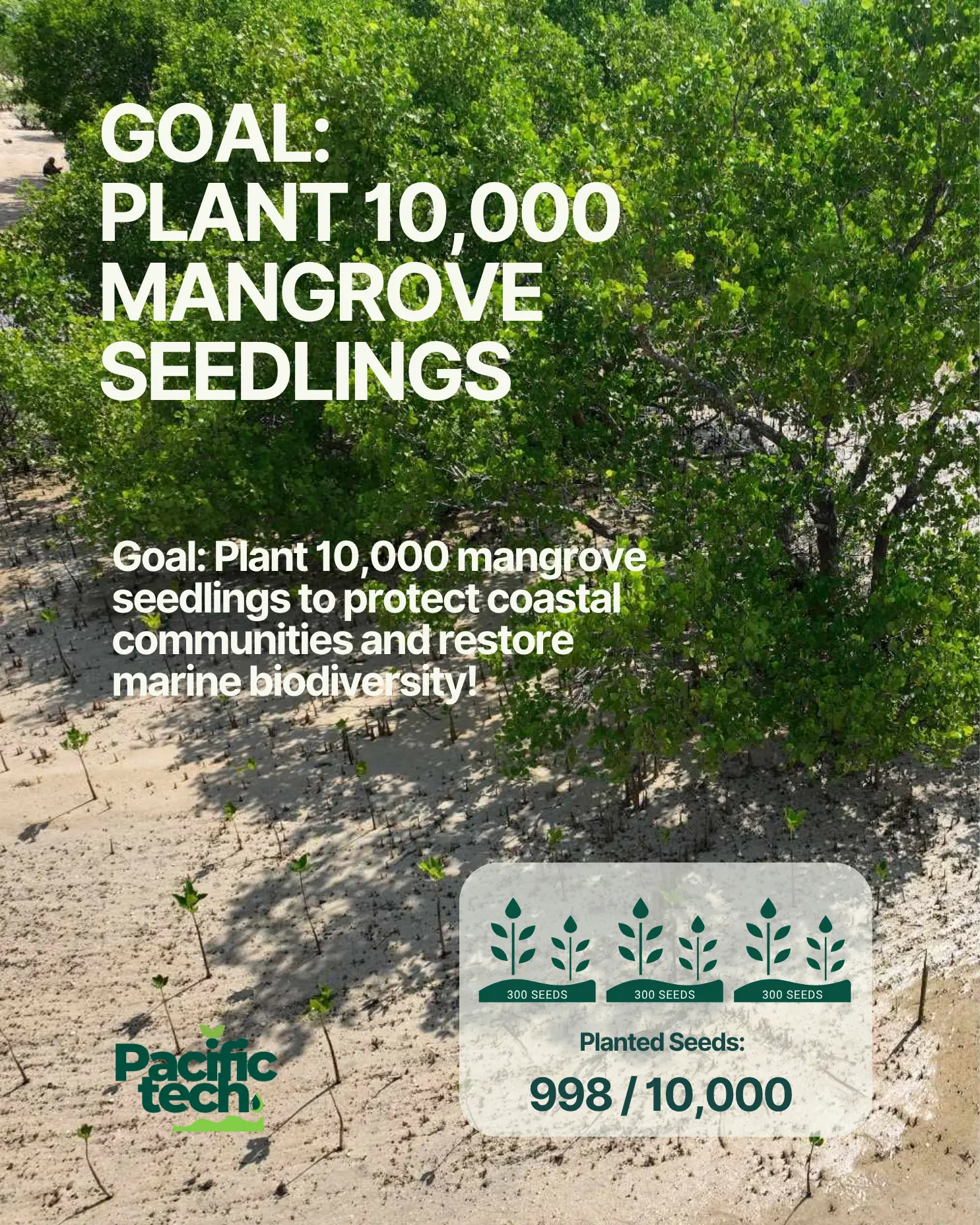
Community-supported planting protects coastlines while supporting marine biodiversity, climate resilience and sustainable fishing livelihoods.

PACIFICTECH goal to plant 10,000 mangrove seedlings, with 998 recorded
Goal: Plant 10,000 mangrove seedlings

Coastal protection

Mangroves help reduce erosion and shield vulnerable communities from storms.

Climate action

Healthy mangrove ecosystems store carbon and support locally led adaptation.

Marine nurseries

Mangrove roots provide essential habitat for fish, crabs and other aquatic life.

₱1005 seedlings planted and nurtured₱50020 mangroves plus a fisherfolk planter₱5,000Adopt a mangrove patch with your name

Learn. Research. Innovate. Sustain.

Connect with PACIFICTECH programs, platforms and community action.

Explore the portal